
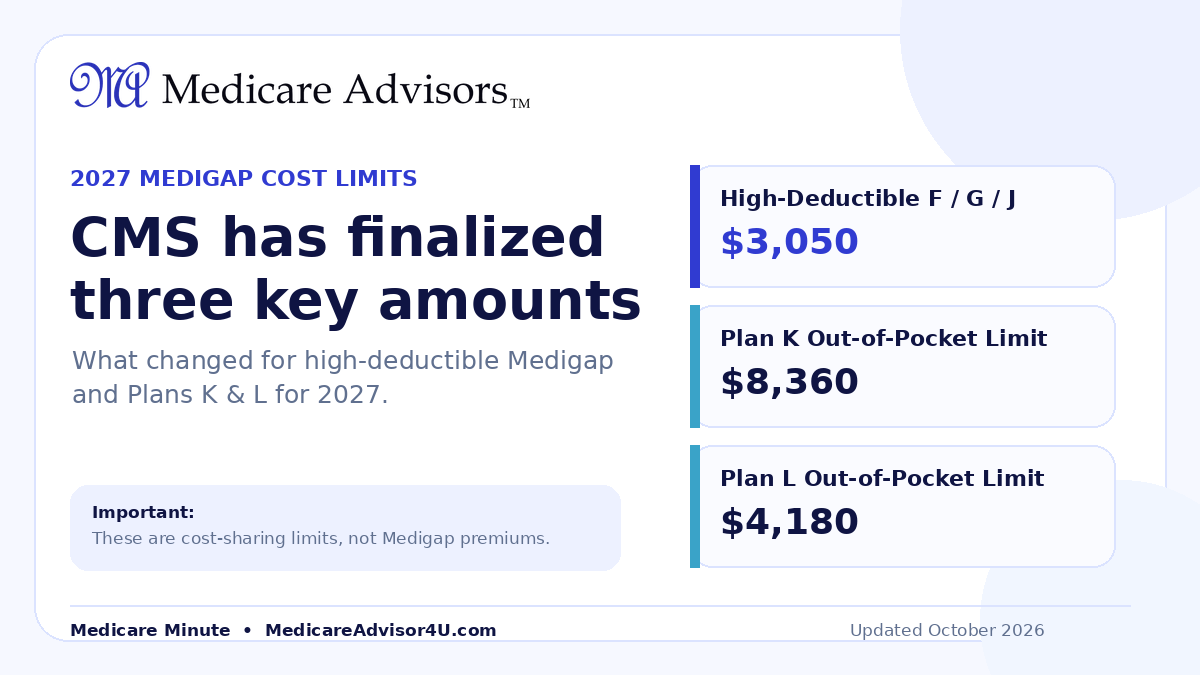
CMS has finalized three important 2027 Medigap amounts
CMS released the 2027 annual deductible for the high-deductible versions of Medigap Plans F, G and J, along with the annual out-of-pocket limits for Medigap Plans K and L.
- High-deductible Plans F, G and J: $3,050 in 2027, up from $2,950 in 2026.
- Plan K annual out-of-pocket limit: $8,360 in 2027, up from $8,000 in 2026.
- Plan L annual out-of-pocket limit: $4,180 in 2027, up from $4,000 in 2026.
What the $3,050 high-deductible amount means
High-deductible versions of Plans F and G require the beneficiary to pay Medicare-covered out-of-pocket costs up to the annual deductible before the Medigap policy begins paying covered benefits. For 2027, CMS set that amount at $3,050.
High-deductible Plan F is generally available only to people who became eligible for Medicare before January 1, 2020. High-deductible Plan G is available to people who became eligible on or after that date. Plan J is no longer sold to new enrollees, but CMS still publishes the deductible because some beneficiaries continue to hold older high-deductible Plan J policies.
Plans K and L work differently
Plans K and L pay a percentage of certain Medicare cost-sharing amounts until the beneficiary reaches the plan's annual out-of-pocket limit and has met the applicable Medicare Part B deductible. After those requirements are met, the policy pays 100% of covered services for the rest of the calendar year under the standardized benefit design.
For 2027, the annual limit is $8,360 for Plan K and $4,180 for Plan L.
Medigap enrollment is not the same as Medicare Annual Enrollment
With Medicare Annual Enrollment approaching, this distinction is especially important. The October 15–December 7 Medicare Open Enrollment Period is primarily when people can join or change Medicare Advantage and Part D drug plans or return to Original Medicare.
Your federal Medigap Open Enrollment Period is different. Medicare.gov explains that it is generally a one-time six-month period beginning the first month you are age 65 or older and enrolled in Medicare Part B. Outside that period, federal law may not guarantee that an insurer will sell you a Medigap policy, although guaranteed-issue rights and state-specific protections can apply in certain situations.
What should current or prospective Medigap policyholders do?
If you already have a Medigap policy, review your carrier's 2027 premium notice and understand whether your plan uses one of the limits above. If you are considering Medigap, compare the standardized benefits, the insurer's premium, rate history, household discounts when applicable, and your enrollment rights before making a change.
Do not cancel existing Medigap coverage until you understand whether you can qualify for and obtain the replacement coverage you want.